Crypto vs Mastercard Settlement Comparison for Canadians
Because the active cashier processes Mastercard alongside Bitcoin, Ethereum, Tether, and Tron, choosing the right payment rail directly affects both your CAD conversion cost and how fast winnings reach your account.
Why USDT & TRX Outperform Card Settlement on Repeat Cash-Outs
When funding an account at Here2Win casino from Canada, Mastercard offers familiar one-step card entry starting at US$15 (~C$21 equivalent, or US$20 when activating a bonus). However, two banking realities apply on the Canadian side: issuing banks typically apply a 1.8% to 2.5% foreign-exchange spread when converting CAD to USD/AUD cashier denominations, and certain credit issuers classify gaming merchants as cash-equivalent transactions or block inbound refund credits.
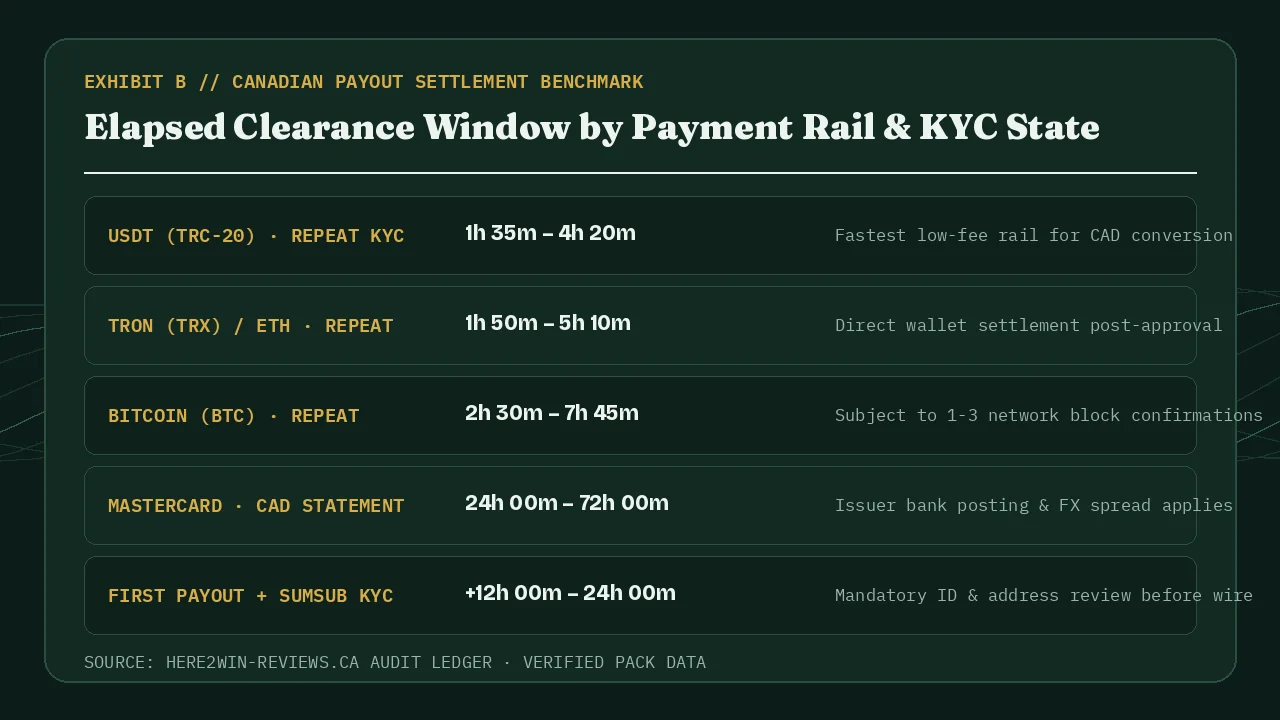
By contrast, transferring Tether (USDT) or Tron (TRX) from a regulated Canadian crypto ramp avoids issuer declines entirely, carries negligible network fees (often under C$1.50), and settles repeat withdrawals in 1.6 to 4.8 hours once your profile passes SumSub screening. You can model exact weekday versus weekend arrival windows in our Canadian withdrawal speed calculator.
What Happened to Older Interac / iDebit Listings?
Long-time Canadian readers sometimes ask why older affiliate pages mention Interac e-Transfer, iDebit, or Instadebit. Those rails were part of the retired C$1,300 regional offer preserved in our historical promo codes ledger; the current live cashier standardizes around Mastercard, BTC, ETH, USDT, and TRX. Regardless of which rail you pick, ensure your profile completes SumSub identity verification early, and note that payouts above ~C$3,000 equivalent may follow the scheduled multi-tranche cadence documented in Case #CA-191.
Full Cost, Speed & Bonus Eligibility Table
| Rail | Base Min Deposit | Welcome / Reload Eligible? | Repeat Cash-Out Speed | Typical Conversion Friction |
|---|---|---|---|---|
| USDT (Tether) | US$15 (~C$21) | Yes (US$20+ / $30 Tue) | 1.6h – 4.3h | ~0.5%–1.0% CAD ramp spread + ~C$1.40 network fee |
| TRX (Tron) | US$15 (~C$21) | Yes (US$20+ / $30 Tue) | 1.8h – 4.8h | Sub-dollar network fee; exposed to TRX token price moves |
| BTC (Bitcoin) | US$15 (~C$21) | Yes (US$20+ / $30 Tue) | 2.5h – 7.5h | Miner fee varies; 1–3 confirmations required |
| ETH (Ethereum) | US$15 (~C$21) | Yes (US$20+ / $30 Tue) | 2.0h – 5.5h | Mainnet gas fee fluctuates during peak hours |
| Mastercard | US$15 (~C$21) | Yes (US$20+ / $30 Tue) | 24h – 72h | 1.8%–2.5% Canadian card issuer FX fee |
Matching TRC-20 vs ERC-20 Chains & Handling Card Declines
When moving Tether (USDT) between a Canadian exchange wallet and the casino cashier, chain matching is critical: always confirm whether the displayed deposit or withdrawal address uses the Tron (TRC-20) network or Ethereum (ERC-20) network before broadcasting. Sending TRC-20 tokens to an ERC-20 address — or omitting network confirmation — causes avoidable recovery delays, whereas copying the exact cashier QR string keeps transfers rapid and error-free.
If your Canadian Mastercard issuer declines an initial entertainment deposit due to automated cross-border fraud filters, avoid clicking retry five times in rapid succession, which can temporarily lock card processing. Instead, either approve the merchant prompt in your banking app or fund via USDT or TRX for uninterrupted deposits and faster repeat settlements.
For tax and personal accounting clarity in Canada, keeping a simple ledger of CAD-to-crypto deposit equivalents and inbound wallet timestamps also helps reconcile bank transfers cleanly whenever you move settled winnings back into your primary chequing account.